
Everywhere I look — customers, vendors, the news, conversations at international companies and think tanks — organisations are trying to embrace AI and still struggling to settle on a strategy.
A lot of people have been removed on the assumption that AI could cover the work. Even in software development, where developers were seen as the most impacted. And yet we cannot point to established numbers showing the improvement in efficiency.
Here is one reason I think it isn’t working.
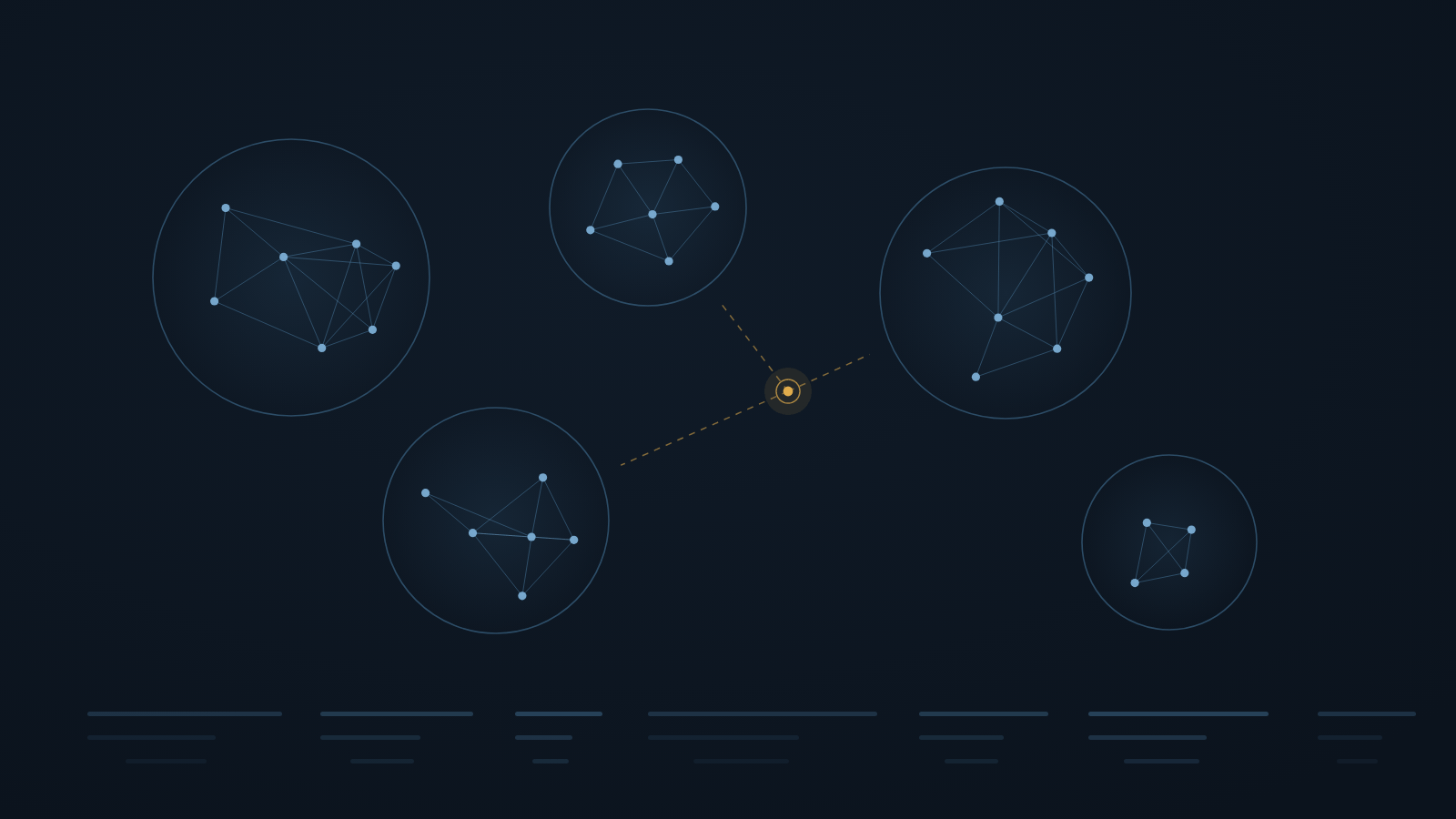
Different teams in the same company adopt different AI tools for their own tasks. One organisation ends up using several AI providers for several jobs, and none of them knows what the others know.
A simple example. Take a capability like Cloudflare’s, where AI analyses historical traffic data and decides how to respond. The system is not the problem. Its historical data is skewed towards whatever it has seen — the full picture of how a customer produces and uses data on a platform is not known to it. So a genuine business call can look suspicious and get blocked. Just one indicative example.
It is like having a very intelligent person whose knowledge is limited to a small bubble. Inside the bubble they compute fast and decide well. The moment new information arrives, it is treated as a threat.
The same is true of money. Every country works to make money move fast inside its borders. Moving it across borders is what would make a truly global economy — and that is where the blockers always are.
Earlier in my career a leader told me something I have not forgotten. If a problem comes to you more than once or twice, it needs a permanent solution. Your job is to make sure the same problem never comes to you again — which means making sure it never happens at all. So the solution you choose has to fix the thing fundamentally.
Six years as a product manager have pushed me to look for fundamentals and fix things bottom up.
I used to think the way to enable an organisation or a customer for AI was to start with the use case. Find a problem AI is well suited to, then work backwards to what you would need to deliver it — the data, the tooling, the integration. That approach still has some merit in my eyes.
I now believe the first step is different. Before an organisation can be AI-enabled, its data has to be captured completely, normalised, correctly structured and categorised. Filtered, readable, understandable, and accessible across all platforms.
Because only once the data is ready can a system identify trends, patterns and anomalies. And only then does every business term mean the same thing everywhere — so a dashboard, a chatbot and an ML model all give the same answer.
Without that, we spend millions and get very little back.
I have spent the past few months learning this, largely through Databricks’ training material, which is extensive and helpful. I am a product manager who makes decisions from data, and this has changed how I see the problem.
~R

