
Hello there! I hope you are doing great. Happy Tuesday to you, I hope you are having a fantastic week.
Welcome to my AI led blog series ‘Explained in a Story,by AI!’. Today, we will talk about ‘Bitcoin Lighting Network’. So, let us deep dive in a story, shall we?
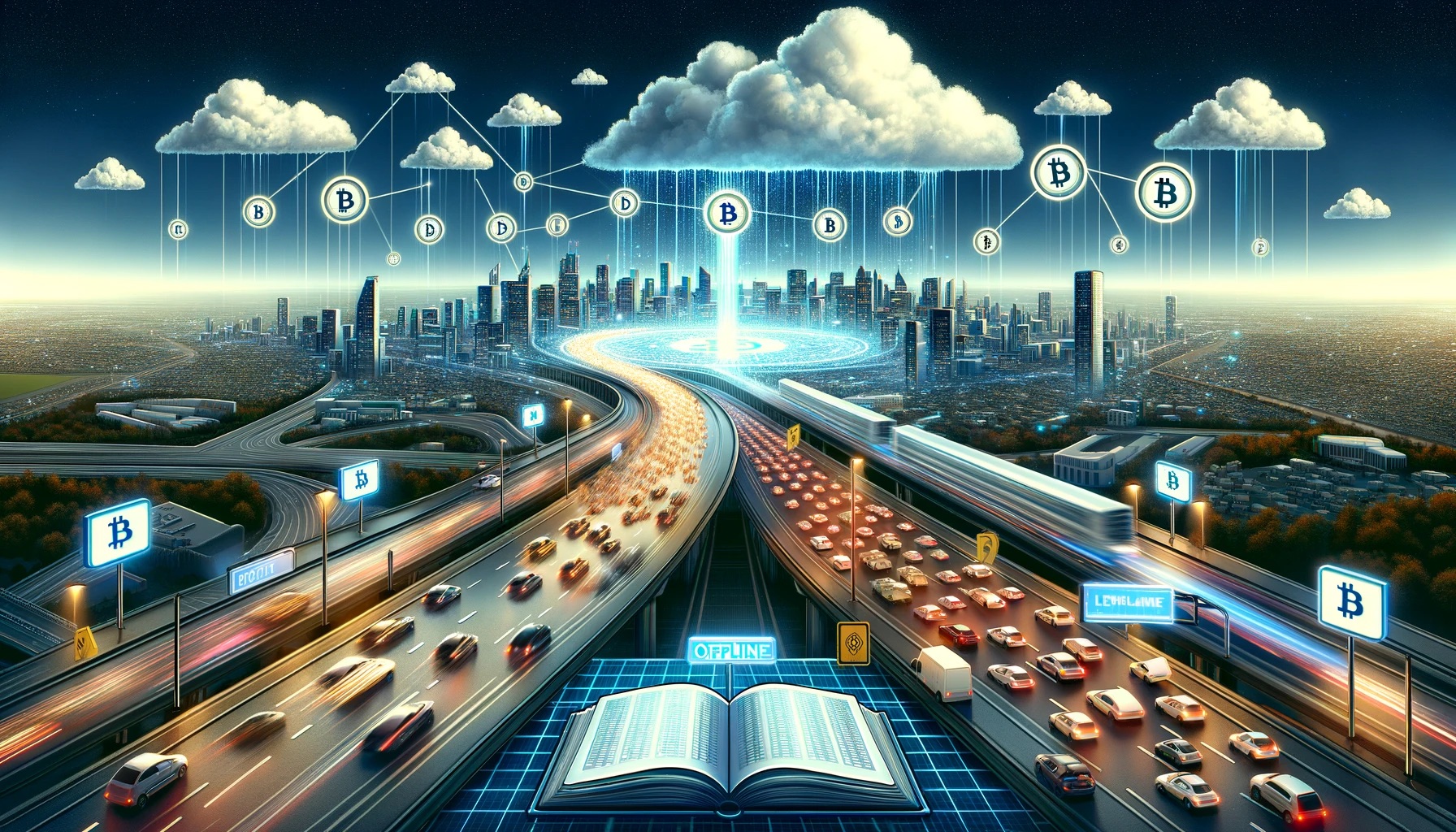
In the digital realm of cryptocurrencies, there was a famed city named Bitcoin. Known for its robust security and detailed record-keeping, Bitcoin had one issue: popularity led to its streets being jam-packed, slowing down transactions and hiking up fees.
Then came a hero, the Lightning Network, akin to a network of high-speed skyways above the congested city. Designed for swift and economical exchanges, it was ideal for those engaging in frequent Bitcoin transactions. Imagine opening a tab at a café, where you can order multiple times and pay the bill just once at the end.
For instance, Alice and Bob frequently traded. On the main Bitcoin network, each trade was a slow and costly affair. However, by opening a channel on the Lightning Network, they could conduct unlimited transactions swiftly and almost freely. These transactions were like IOUs, tracked meticulously by the Lightning Network.
Once their trading concluded, they closed their channel. The Lightning Network then updated the main Bitcoin ledger with the final balance, a single transaction reflecting their cumulative activity. This system kept the Bitcoin ledger orderly and eased its transactional load.
What about trading with someone you don’t have a direct channel with? If Alice wanted to send Bitcoin to Charlie, whom she didn’t directly know, but Bob did, Alice could route her payment through Bob. This interconnected web made the Lightning Network incredibly versatile.
The Lightning Network brought a new era of speed and affordability for small transactions, while simultaneously keeping the Bitcoin network efficient and secure.
However, our hero faced its own set of dragons. Firstly, channels required Bitcoin to be locked up, akin to having cash on hand to open a tab. This was challenging for large or numerous transactions.
Secondly, the Lightning Network, while perfect for small, quick trades, wasn’t ideal for larger transactions. It was like a skyway system great for bicycles and scooters but not for trucks.
Thirdly, the network’s efficacy hinged on users being online. If a participant like Bob went offline, it could disrupt the transaction chain.
Lastly, the Lightning Network, still in its growth phase, wasn’t as widely adopted as Bitcoin, resulting in fewer channels and trading routes.
Despite these hurdles, the Lightning Network remained a valuable addition to Bitcoin, offering speedy, cost-effective solutions for everyday transactions and helping the main network stay robust and secure.
In the end, the city of Bitcoin and the Lightning Network continued their symbiotic existence, complementing each other’s strengths and evolving to overcome their weaknesses.
And thus, our tale concludes, highlighting not just the marvels of Bitcoin and the Lightning Network, but also the importance of growth and adaptation in the ever-evolving world of digital currencies. 🌟
I hope you are liking this series, and finding it useful. If you are following it, great, you are going to learn a lot of things.
My best wishes to you, for the learning lifestyle. Keep it up champ.
Love and Luck.
~R
 An Observer